


Saving: The Best Kind Of Investing
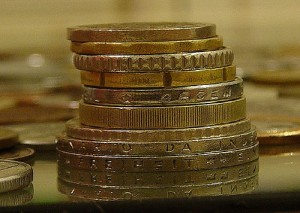
Photo By: Jeff Belmonte
Benjamin Franklin once famously said “A penny saved is a penny earned.” But Ben was seriously undervaluing the value of savings. A penny saved is usually worth considerably more than a penny earned, and this is something you should always consider in your daily life.
Why is the saved penny better?
You may wonder how a penny saved can be more valuable than a penny earned, but it’s very simple if you think about it. Imagine for a moment that you purchase an $80 DVD player. In this theoretical situation, you make $10 per hour and work an eight hour day, earning $80. The difference between the $80 you spent on the DVD player and the $80 you made at work is: you have to pay taxes on the $80 from work. So, even though you’ve earned $80 and spent $80, you’re actually behind where you started.
The United States didn’t have income tax in Ben Franklin’s time, so his thinking is understandable.1 His advocacy of saving, however, is even more true today than it was in his time. Many people pay income tax of 33% or more. To pay for a $100 item at that income tax rate, you have to make $150. In other words, you have to earn 50% more than you spend on something to break even. At those levels, a penny saved is worth 50% more than a penny earned.
What about lower tax brackets?
Credible estimates suggest that 38% of “families” pay no income tax.2 Even these families, however, usually pay Social Security taxes and, of course, sales taxes on their purchases. Usually these are often the families who are most in need of some added security, and quite probably having the most trouble creating any savings. While the penalty for purchasing may be lower for these families, due to increased difficulting creating secure savings, unnecessary purchases should still be avoided.
Advantages of Saving
Saving is a good habit to develop. Here are some benefits to keep in mind when you are having trouble deciding whether you’d rather have that DVD player or the money in the bank:
- The freedom that comes with financial stability will usually last longer than a DVD player.
- Purchases tend to go down in value, savings tend to increase (although not always at the rate of inflation).
- While you may think you can afford something right now, an emergency can change your financial situation very quickly.
- People more often have buyer’s remorse than non-buyer’s remorse.
Ultimately, finding ways to motivate yourself about saving is a pivotal step in financial freedom. Until you see saving as a joy instead of a chore, you will struggle to have the security enjoyed by those who do save.
We believe that personal finance and investing are issues that are incredibly daunting because we are generally not equipped with the basics. This site is designed to help you learn how to make better decisions about how to manage your money.
- Kristen Simmons: I use to be in the 'consolidate debt with credit cards' club...
- Home Care Nurse: I so agree with brad, I blame this insurance companies for t...
- Samantha Milner: Hi guys, I knew about most of the deductions. But I didn...
- ETF Funds: Trading in ETF Funds is a solid way of minimising tax wehen ...
- ETF Funds: There is no shortage of vehicles by which to trade, and whil...
- Welkin Capital Group: I agree with Mike and with this blog. While it seems counter...
Leave a Reply